Calgary mobile kitchen rentals for planned and emergency use
Calgary mobile kitchen rentals begin with a property the food-service team can actually use. The city’s mobile-vendor guidance separates location approval from operating requirements and identifies owner authorization for private-property activity. Temporary Commisary Kitchens 123 International considers cooking space for planned renovations and emergency closures through one-week or monthly rentals. Commercial caterers, hospitals, schools and industrial kitchens should show how the proposed area connects to their retained meal service. Name the Calgary receiving address and equipment entrance, with construction activity and utility arrangements marked for delivery assessment. Contact us to discuss kitchen availability and request a quote for that location.
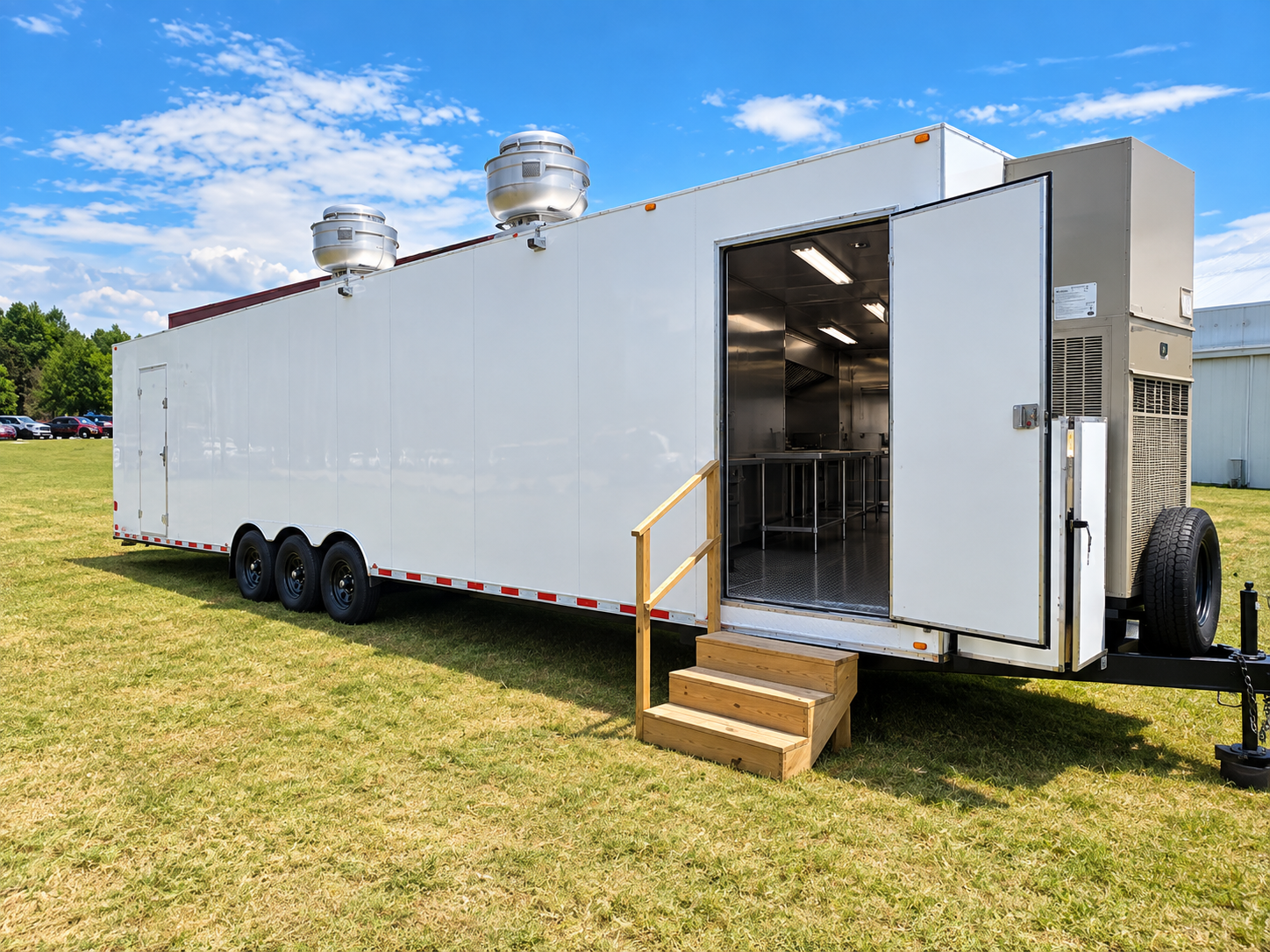
Choose the receiving property before the operating label
Calgary’s business guidance says businesses operating from a city location need location approval and distinguishes several types of mobile food activity. It also identifies written owner authorization for private-property food-truck operations. These are useful first questions for a rental kitchen, but a large institutional replacement installation should be described to the city in its own terms. Explain its intended use, duration and connection to the permanent facility before assuming a street-vending category fits.
We can discuss temporary cooking space around the location your facility can actually make available. If repairs block the normal kitchen yard, consider whether another approved receiving area would let staff continue preparing meals and transfer them back to the serving building. Bring the property manager into that conversation early. A workable site and a clear operating brief give us a better basis for discussing kitchen configuration than a request based only on the number of appliances in the old room.
Sources for this local guidanceExternal planning sources · opens in a new tab
Join the health and fire conversations early
The Calgary mobile-vendor guide sets out health, fire and land-use approval steps, and the city reported a food-truck inspection event ahead of the 2026 season. That report concerns the city’s own inspection activity, not this brand’s equipment. For a temporary kitchen project, use the official guide to identify the questions the operator should put to the relevant officials, including how the cooking configuration and location will be assessed.
For a planned shutdown, send us the menu, tasks that must move and the proposed production area while those discussions are under way. We can compare preparation, cooking and packing needs with a potential rental layout. Staff should be able to collect ingredients and finish meals without crossing the contractor’s work zone repeatedly. The proposed benefit is a separate kitchen workflow during the renovation, with the actual equipment, permissions and operating arrangements agreed for your project.
Sources for this local guidanceExternal planning sources · opens in a new tab
Describe the entrance the transport team will use
Calgary’s Deerfoot Trail study places the corridor within the city’s goods-movement network. Its mobile-vendor guidance also points operators to truck-route and wastewater requirements. For an institutional delivery, that regional transport context must be connected to a real receiving entrance. Identify the property approach, space to position equipment and any construction activity that will occupy the same yard during the kitchen lease.
A site sketch should show the kitchen position, usable water and power arrangements, staff access and the route to the serving facility. For an unexpected disruption, identify what remains usable before proposing the temporary operation. For scheduled work, set out the changeover sequence so delivery, connections and the first meal are discussed separately. We can assess a Calgary quote around those details, including the rental period and transport requirements; geographic proximity alone does not establish availability or an arrival time.
Sources for this local guidanceExternal planning sources · opens in a new tab
Nearby communities for your project brief
Include the actual receiving community and full address in your enquiry. These places give geographic context for planning; availability and transport are confirmed for your destination.
- Airdrie
- Chestermere
- Cochrane
- Okotoks
- Strathmore
Community referencesExternal planning sources · opens in a new tab
Local access context for the receiving site
Calgary identifies Deerfoot Trail as part of its Primary Goods Movement Network.
Transport and location referencesExternal planning sources · opens in a new tab
Rental terms, delivery and setup
Operating hours are 24/7, with one-week and monthly rental terms. GPS tracking is available on request. Pricing is confirmed through a project-specific quote, and delivery timing is agreed for the location and requested schedule.
Use approximately 5 hours for kitchen setup, 4–6 hours for ramp setup and 5–15 minutes for stairs. These are separate planning estimates; confirm the installation sequence, access arrangement and site readiness for the selected kitchen.
Before you rent
Frequently asked questions
Answers about rental formats, equipment, connections and receiving arrangements.
Send your kitchen requirementsCan a Calgary rental kitchen operate anywhere on private property?
Calgary identifies location approval and owner authorization as separate considerations. Explain the proposed institutional or commercial installation to the city and health officials before choosing the final site.
Can kitchen selection begin while local review is under way?
Yes. Share the menu, equipment priorities, property space and connections so we can discuss a proposed rental layout. Approval and project availability still need to be resolved before operation.
What should I include for a Calgary delivery quote?
Provide the full receiving address, service entrance, placement photographs, connections and intended dates. Tell us about construction access that may affect positioning or the meal-transfer route.
Your next kitchen project